That isn't an accident. The lid and base are manufactured to extremely close tolerances, controlling how quickly air can enter the box as the two halves separate. The result is a deliberately slow reveal. (This is beginning to sound like one of those spicy books. A Court of Cardboard and Roses.) Before you've switched the phone on, touched the screen or taken a photograph, the packaging has already told you something about the object inside it. This is expensive and has been considered. Someone cared about this.
“We strive… to define objects that appear effortless. Objects that appear so simple, coherent and inevitable that there could be no rational alternative.”*
Packaging isn't inherently pointless. It protects things. It contains them. It communicates information. It helps products survive warehouses, vans, shop floors and the occasional delivery driver having a bad day because they've nowhere to pee.
That experience didn't happen by accident. Someone had to decide how large the box should be, how the phone would sit inside it, how the lid would behave, what materials would be used and, eventually, what would happen to it once the phone came out.
Packaging has a purpose. The question now is how much of it we actually need?
The EU's new Packaging and Packaging Waste Regulation (PPWR, exciting isn't it) generally applies from 12 August 2026. It covers packaging of virtually every kind placed on the European market and has a fairly straightforward ambition: Europe needs to use less packaging, make more of what remains recyclable, increase reuse and reduce its dependence on virgin materials. All good things in my opinion.
However, the scale of the problem isn't difficult to see. At one end we have packaging such as Apple's, where the material and construction have clearly been considered as part of the product experience. At the other is the USB cable that arrives from big old Bezos towers in a box capable of fitting a microwave, a chainsaw and a donkey, surrounded by enough brown paper to recreate the forest it came from.
PPWR isn't trying to eliminate packaging. It's asking businesses to justify what's there.
For businesses selling products in Europe, that's going to affect decisions that were previously driven by cost, manufacturing, marketing or simply because that's how the previous box was made. For designers, printers and packaging manufacturers, it changes some of the constraints within which those decisions are made.
One unhelpful consequence of a regulation having an application date is the impression that everything changes at midnight.
It doesn't.
PPWR generally applies from 12 August 2026, but many of its most visible requirements are being introduced over several years. Businesses don't need to wake up on Wednesday morning, run into the warehouse and start setting fire to boxes that were perfectly acceptable the day before.
One of the biggest changes comes from 2030, when packaging will begin having to meet new design-for-recycling requirements. By 2035, the EU will also start asking whether that packaging is actually being recycled at scale, rather than simply whether it could be. There's a substantial difference between something that's recyclable under the right conditions and something that routinely makes its way through collection, sorting and recycling and comes out the other side as useful material.
By 2030, packaging will need to be designed so that its weight and volume are reduced to what's necessary for it to do its job, taking into account product protection, hygiene, safety, transport and functionality.
Double walls, false bottoms and unnecessary layers used to make a product look bigger are explicitly in the sights of PPWR. And “it looks better on the shelf” is no longer much of an excuse for the extra packaging.
Packaging has always done more than protect what's inside it. It creates presence on a shelf. It communicates value. It can make something feel luxurious, substantial, clinical, cheap, handmade or reassuringly expensive before you've touched the product itself. The oversized perfume box and the tiny bottle hidden somewhere in its centre aren't necessarily an accident. The space is part of the sales pitch.
Under PPWR, that space increasingly needs to justify itself.
We've all had the delivery where you open a box, remove six metres of brown paper, another box, a few air cushions and eventually discover the tiny thing you actually ordered somewhere at the bottom.
From 2030, the EU starts putting limits on some of that. Certain ecommerce, grouped and transport packaging will face a maximum empty-space ratio of 50 per cent. And before anyone gets clever, stuffing the empty half with shredded paper or air cushions doesn't count as filling it. The stuff you ordered has to do that.
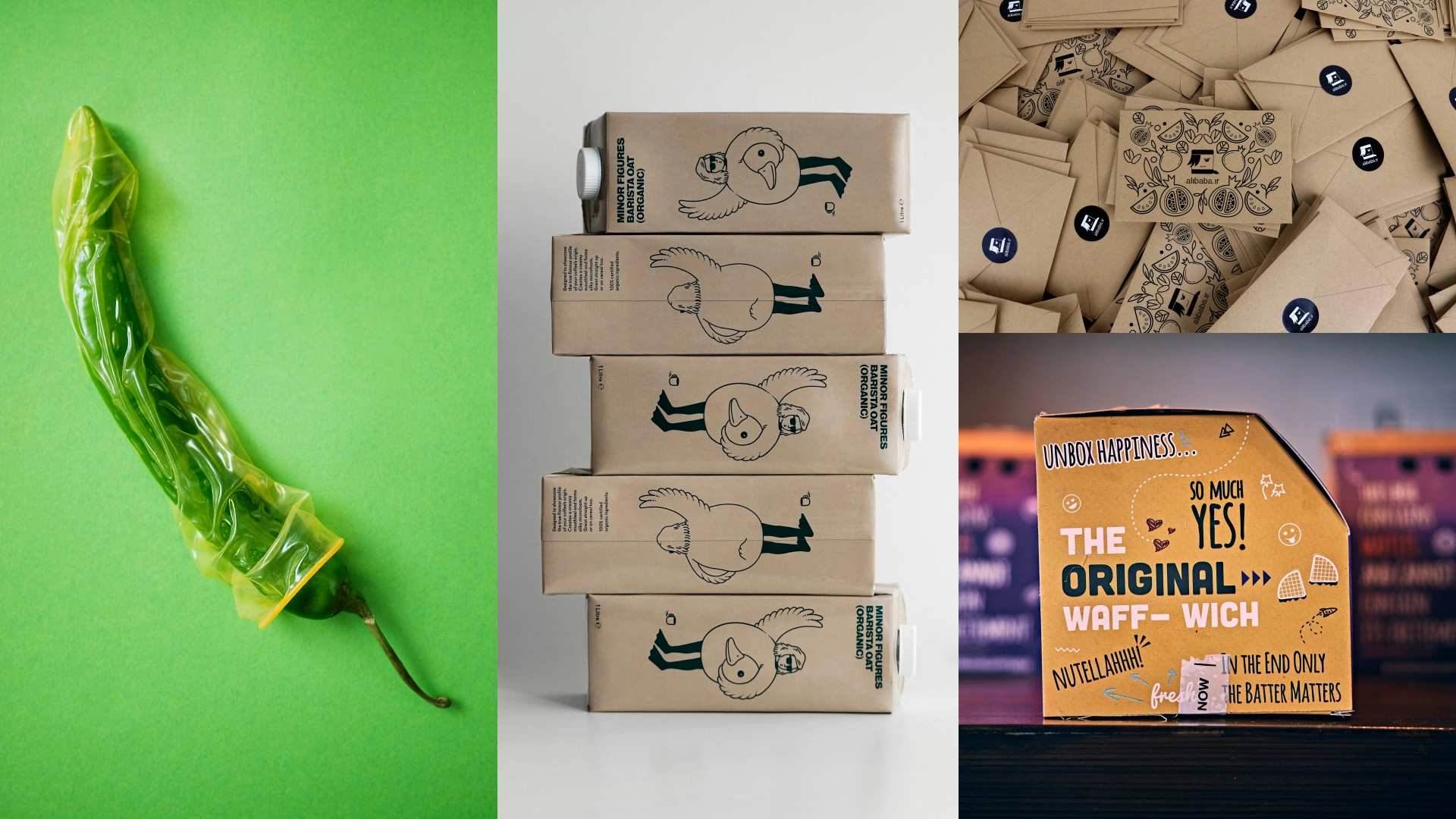
If size, material, weight, recyclability and eventually reuse are increasingly constrained, the obvious fear is that everything ends up looking the same: brown cardboard, minimal printing, no finishes and a slightly apologetic leaf somewhere near the barcode.
There's a danger here too. Push regulation far enough into design and you can imagine the supermarket of the future: fifty metres of regulation-perfect boxes, all the correct size, all made from the approved materials, all using the minimum amount of ink, all looking like they were designed by the same government department on a wet Tuesday afternoon. Very recyclable. Completely miserable.
That's obviously the extreme version, but it's worth asking where environmental responsibility ends and unnecessary prescription begins. Packaging isn't just the thing we throw away. It's part of the product, part of the brand and sometimes, as Apple proved, part of the experience of buying it.
People are clever. Give a good designer fewer materials, less space and a list of things they can't do and they'll start looking for the things they can. Maybe the character comes from the structure rather than another finish. Maybe opening the thing becomes part of the experience. Maybe taking something away makes the idea stronger. Constraints don't have to make everything look the same. They can force us to find new ways of making things different.
Constraints aren't new to design. Every project has them, whether it's a budget, a dieline, accessibility requirements or being told you've got two colours when you'd really quite like six. Packaging has always had more than its fair share, particularly when you're trying to squeeze ingredients, legal copy, recycling information, a barcode and a brand story onto the back of something roughly the size of a playing card.
Good design doesn't happen because there are no restrictions. Quite often, it's the restrictions that force you to find a better answer.
For some businesses, initially, yes. Existing packaging ranges may need to be reviewed and redesigned, different materials tested, new tooling made and prototypes produced. A company with hundreds of products obviously has a very different problem from a small business producing a single carton, and none of that work happens for free.
But there's another side to that cost. A smaller pack means less material, less warehouse space and potentially more products on a pallet or delivery vehicle. Remove an unnecessary component and you might remove an entire manufacturing process along with it. Sometimes, designing with less simply means paying for less.
There's also the cost of making the wrong decision at scale. Spending more time considering a package before manufacturing it is one thing. Discovering the problem after 50,000 of them have arrived is another.
The good news is that none of this requires businesses to wait for the packaging industry to catch up. The materials, processes and production knowledge already exist. PPWR is going to make using them more important.
It's difficult to talk about using less cardboard while parts of Europe are experiencing extreme heat, drought and wildfires. PPWR isn't going to fix climate change, and a smaller box isn't going to stop a forest burning.
But small doesn't mean pointless. We've spent decades making decisions based on what was cheapest now and leaving the bill for later. Europe's wildfire damage has already exceeded €15 billion this summer. Climate change has a cost too, and increasingly we're paying it.
PPWR is one small part of a much bigger change. Energy, transport, manufacturing and consumption all have to be tackled. A smaller box isn't going to save the world. But when you're making billions of them, it's probably worth asking why the box was so bloody big in the first place.
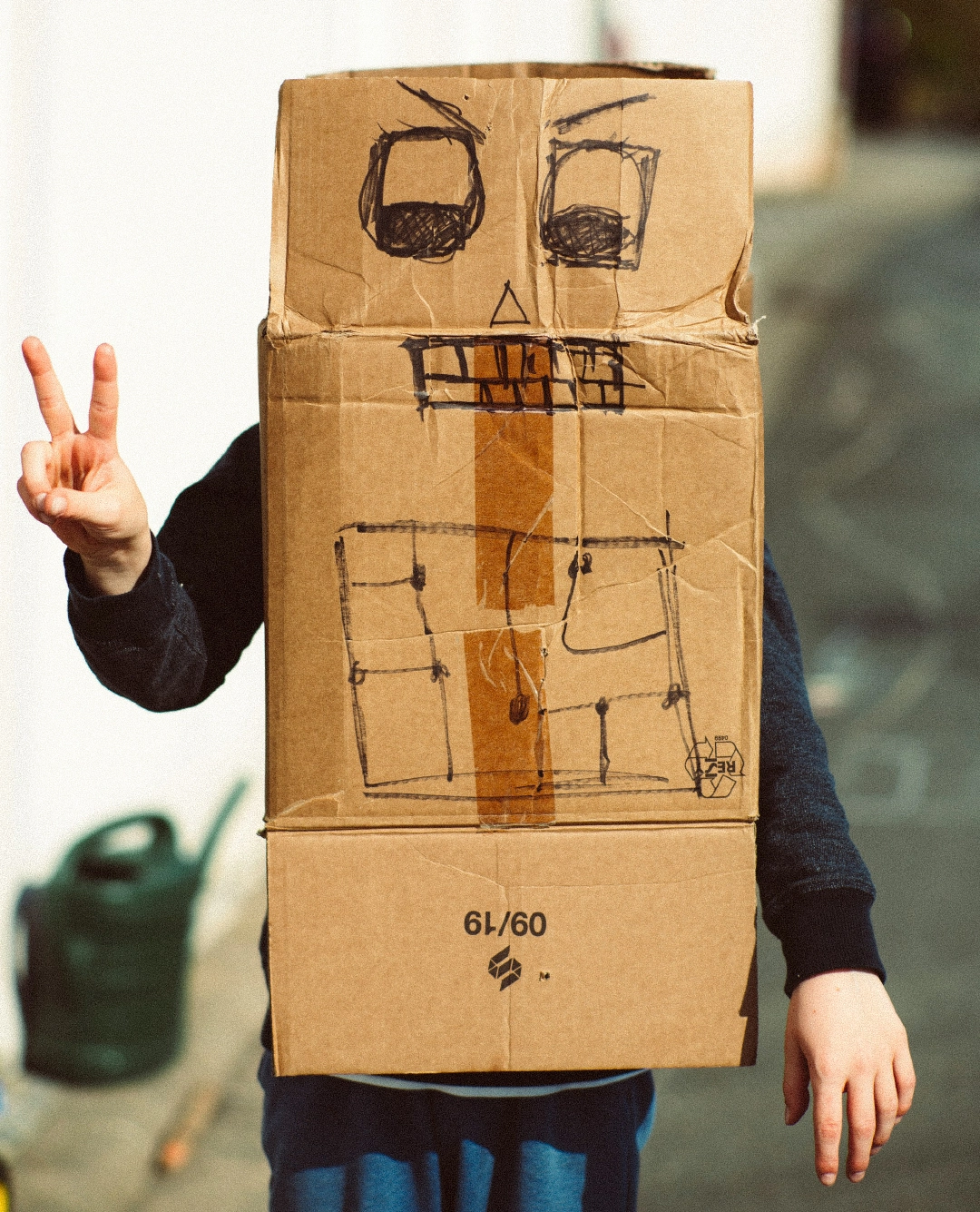
The biggest practical change PPWR brings to a packaging project might not be a new symbol, percentage or piece of legislation buried in the small print. It could simply be that businesses need to ask more questions before anybody starts designing.
That means questioning things that might previously have been taken for granted. Does the product need this much packaging? Is the empty space doing anything useful? Could we create the same experience with less material? And what happens to all of it when the customer is finished with it?
Those aren't questions for the designer alone. Packaging sits between the business, the designer, the printer, the packaging manufacturer, logistics and eventually the recycling system. PPWR means those people need to start talking to each other a little earlier.
Packaging will still need to protect a product, communicate what it is and, occasionally, create that little moment when an iPhone box slowly opens. The challenge is doing all of that while using less, wasting less and thinking a little further ahead.
Packaging has always had constraints. PPWR just gives us a few new ones to design around.
This article provides a practical design overview of the EU Packaging and Packaging Waste Regulation and isn't legal or regulatory advice. Specific requirements depend on the packaging, product, materials, market and the role a business plays in the supply chain.